A vision engine measures your drawings. Eight specialist agents scope the work, take it off, price it and challenge the result. Code does the money. You get an itemized Excel estimate where every line shows where the number came from.
A commercial takeoff is eleven jobs in a trench coat — reading sheets, counting fixtures, measuring pipe, building assemblies, pricing it, typing it up. The system runs the whole set start to finish while you get a coffee, and every number it hands back carries the sheet it came from.
Speed on its own is worth nothing on a bid. What makes the number usable is that you can take it apart: the measuring engine outranks the model on counts, the money is computed in code the same way on every run, and a second agent is briefed to attack the first one’s estimate before you ever see it.
Timing is wall clock from submission to delivered workbook across twelve logged production runs, 2 to 5 September 2026 — median 23 minutes, fastest 18m53s, slowest 40m12s. Run length moves with the size of the set. These are runs of the system, not a benchmark against other software, and the page states no accuracy percentage because there is no like-for-like comparison logged against a contractor’s own number yet.
Not a chatbot reading a PDF. A pipeline where a measuring engine, specialist agents and plain deterministic code each do the part they're actually good at. Scroll the stages — the two diamonds are where code overrules the model.
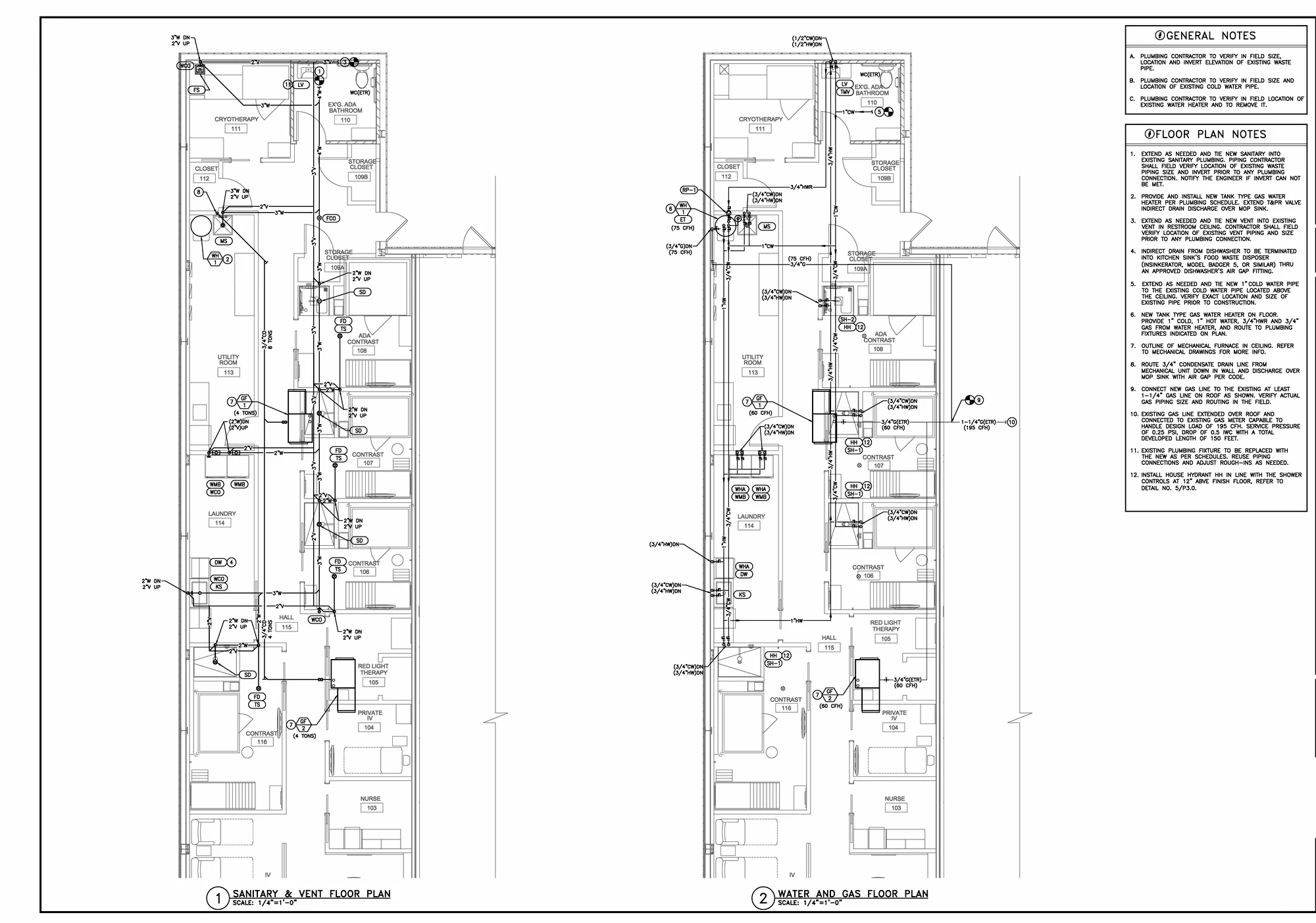
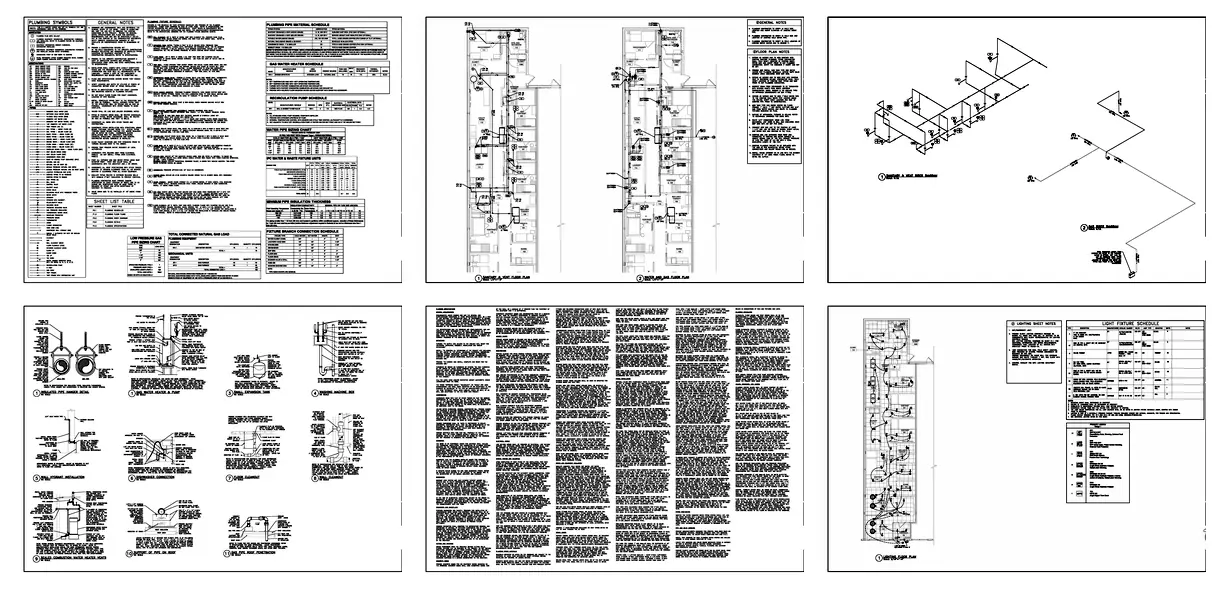
Every page in the document is reported back — including the ones it couldn't read. A page that's an image with no text layer is named as image-only rather than quietly skipped.
If a set carries no biddable plumbing plans at all, the completeness gate rejects it and tells you what's missing — rather than producing a confident number from nothing.
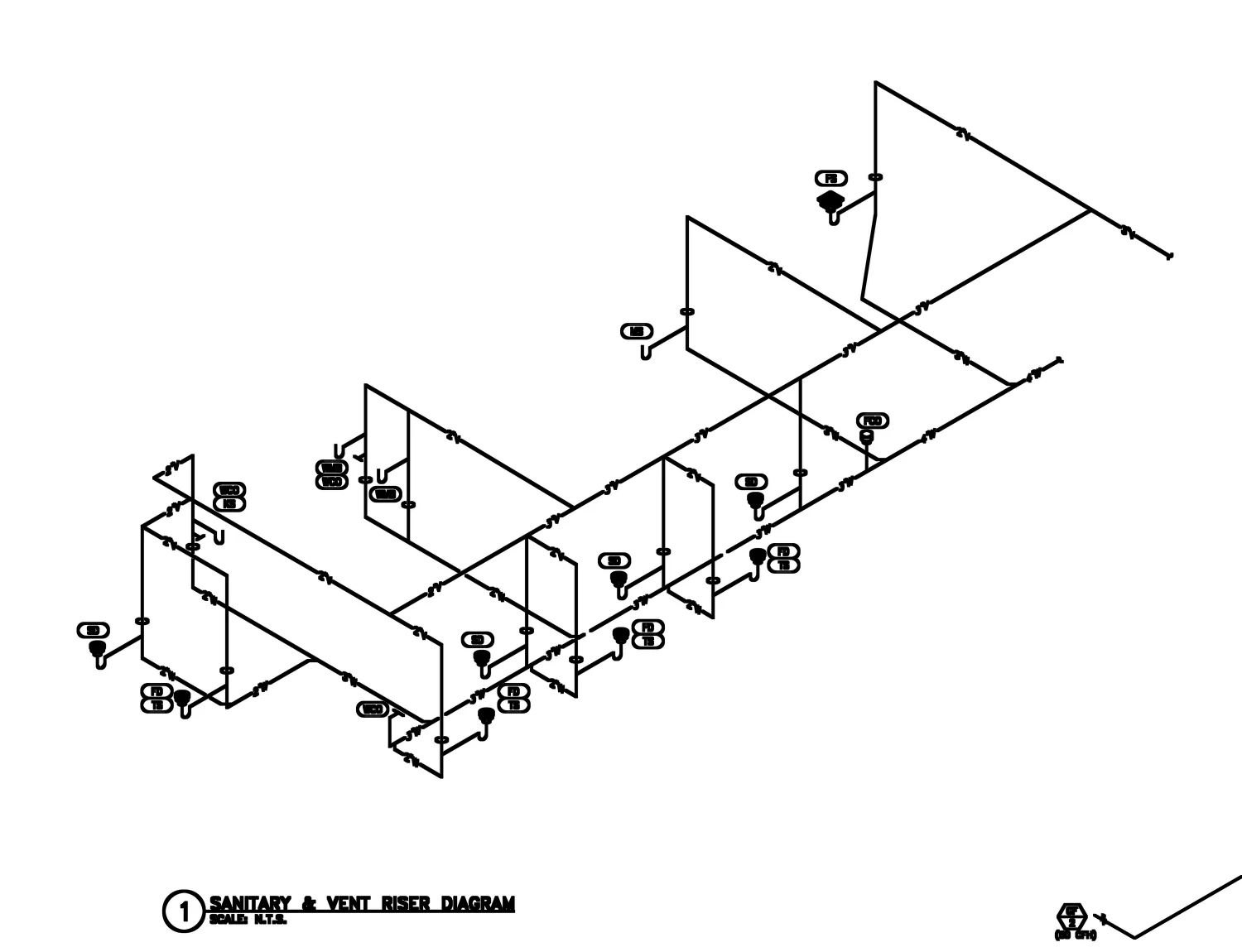
A fixture count is not a takeoff. Every fixture expands into the parts that actually get installed — which is where forgotten line items and thin bids come from. Labor then goes on task by task, hours per unit against real quantities, and every dollar is computed in code — the same way on every run.
The Senior Estimator agent produces its own totals too — but those are kept only as a cross-check. If the agent's arithmetic disagrees with the code's, the run flags the disagreement rather than shipping either number quietly.
The validation agent is instructed adversarially — its literal brief is "do not rubber-stamp". It re-reads the raw blueprint findings and attacks the estimate built from them. A senior agent then rules on what it raised, and flags what a person still has to look at.
TKO-014, a basis of shown, calculated or inferred, and the sheet it came from — printed in the workbook.Every run writes an audit row at intake, page analysis, takeoff, estimate and delivery — so a bid can be reconstructed months later. V1 is in limited beta and the system is configured per company; it is not a product you log into.
Not a chat transcript. An Excel estimate where every row carries its basis, its source sheet and its confidence — so when a GC asks where a number came from, you can point at the row.
| Section | Item | Size | Qty | Unit | Unit cost | Ext cost | Labor hrs | Basis | Source | Conf. |
|---|---|---|---|---|---|---|---|---|---|---|
| Fixtures | ||||||||||
| Fixtures | Water closet — floor mount, 1.28 GPF | — | 24 | EA | 320.00 | 7,680.00 | 96.0 | Engine | P-201 | High |
| Fixtures | Lavatory — wall hung, vitreous china | — | 18 | EA | 210.00 | 3,780.00 | 63.0 | Engine | P-201 | High |
| Sanitary & vent | ||||||||||
| Piping | Cast iron no-hub — horizontal branches | 4" | 1,240 | LF | 34.00 | 42,160.00 | 310.0 | Calculated | P-101 | Medium |
| Piping | Vent risers to VTR | 2" | 620 | LF | 18.50 | 11,470.00 | 124.0 | Inferred | P-401 | Requires check |
| Domestic water | ||||||||||
| Piping | Type L copper — corridor mains | 1-1/2" | 1,580 | LF | 18.00 | 28,440.00 | 237.0 | Calculated | P-201 | Medium |
There's nothing to sign up for and nothing to log into. We build the system around your company — your labor rates, your assemblies, your supplier pricing, your scope rules — and tune it against jobs you've already estimated, until it bids the way you bid.
Two minutes here saves a discovery call. We'll come to it already knowing what you bid and how much of it you're doing by hand.
We take on a small number of companies at a time, because each one is configured and tuned individually. If it isn't a fit for the work you do, we'll say so on the call rather than sell you a pilot.
Choose whatever works. If nothing fits, reply to the confirmation and we'll find a slot.